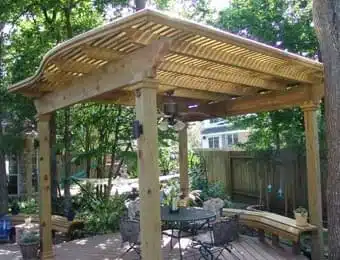
Our Shade Arbors are locally famous for providing the affordable rain-protection, UV-protection, sun-protection and style that you need to transform your backyard into an oasis.
Elevate your outdoor living experience with our expertly crafted outdoor kitchens, where culinary delights meet natural beauty for unforgettable gatherings under the open sky.
Illuminate your outdoor oasis with warmth and charm as you gather around our exquisite outdoor fireplace, creating cherished moments amidst the flickering flames and starlit skies.
Expand your living space and embrace the outdoors with a custom-designed outdoor deck, where relaxation meets sophistication, creating the perfect setting for memorable gatherings and tranquil retreats.
Transform your patio into a cozy haven with our stunning fire pit additions, where the crackling flames ignite evenings of warmth and togetherness, making every moment outdoors magical.
Enhance your outdoor living experience with our elegant patio covers, providing shelter from the elements while preserving the beauty of your outdoor space.
Elevate your outdoor sanctuary with our array of premium upgrades, from stylish pergolas to chic seating areas, each meticulously designed to enhance your outdoor living experience.
Synergy Design and Build
At Synergy Design & Build we bring your backyard vision to life.